 Health & recovery
Sleep and Recovery in Cycling — How Sleep Affects Your HRV
Sleep and HRV: how sleep loss drops morning RMSSD, how much sleep a cyclist needs, and how to read the HRV trend to steer load instead of guessing.
 Health & recovery
Why Year-Round Training Matters — Living with Depression
Regular exercise works on depression like a medication dose — but only taken continuously. Why a winter break reverses the gains and how to build a year-round system.
 Health & recovery
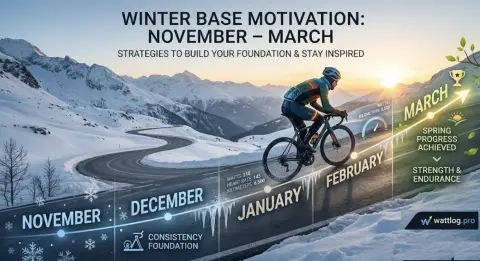
How to Stay Motivated to "Bank" Fitness from November to March
Winter base November–March: how to stay consistent with no races. Process goals, CTL micro-targets and a repeatable weekly trainer structure.
 Health & recovery
Spine Massage for Cyclists — When and What to Choose
How massage helps cyclists with back, neck, and lower back pain. Types of massage, frequency, and when to see a physiotherapist instead.
 Health & recovery
Massage for Cyclists' Back Pain — Which Type and When
Riding position loads your lumbar spine and neck. Types of massage, how often to book, and when to see a physio instead.
 Health & recovery
Cyclists and Physical Therapy — Why Regular Massage and Stretching Aren't a Luxury
Cycling is a single repeated movement pattern with none of the natural variety that balances load in multi-plane sports. That creates predictable overuse patterns.
 Health & recovery
First Spring Enduro Ride — How to Start the Season Without Getting Hurt
The first enduro ride after a winter break is statistically one of the season's most common injury moments — technical reflexes fade faster than aerobic fitness.
 Health & recovery
Lack of Motivation to Train — How to Get Back on the Bike Without Quitting
Low motivation isn't shameful — it's a normal part of training. Even pros have days the bike looks like a torture device. What matters is what you do next.
 Health & recovery
Saddle Pain — Causes and How to Stop It
Saddle pain drives plenty of riders off the bike after a few long rides. Almost always it's a fixable combination of issues, not just a 'tough seat' problem.
 Health & recovery
Sauna After a Ride — Recovery Tool or Risk?
Sauna after training is a ritual for many cyclists. Does it actually speed recovery? The answer is nuanced — here's what the evidence supports.
 Health & recovery
Pollen Season and Cycling Training — How to Plan Rides Around Allergies
At the peak of pollen season, an allergic rider breathes through narrowed, irritated airways, which directly limits oxygen uptake at the same power.
 Health & recovery
Cycling and Heart Health — What Science Says
Cycling is one of the best sports for the heart. But "more is better" isn't the whole truth — intensity and regularity matter too.