 Health & recovery
Spine Massage for Cyclists — When and What to Choose
How massage helps cyclists with back, neck, and lower back pain. Types of massage, frequency, and when to see a physiotherapist instead.
 Training
Zone 2 Training — Building Your Aerobic Base on the Trainer
Zone 2 is the foundation of cycling fitness. Learn what Zone 2 training is, how to nail the right intensity, and why it builds a higher FTP.
 Health & recovery
Massage for Cyclists' Back Pain — Which Type and When
Riding position loads your lumbar spine and neck. Types of massage, how often to book, and when to see a physio instead.
 Everyday riding
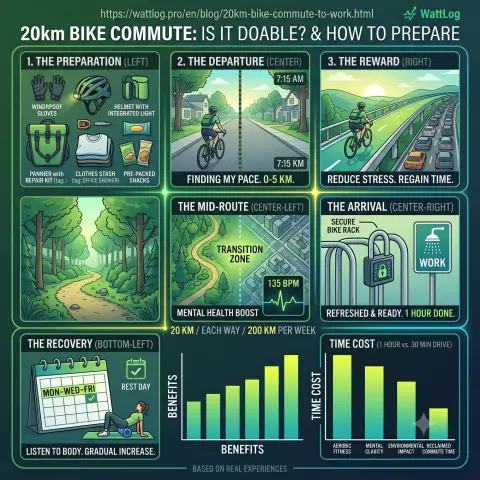
Cycling 20 km to Work — Can You Do It and How to Prepare
20 km bike commute — how long it takes, how to prepare, and whether commuting this distance daily is realistic. Practical tips and gear.
 Everyday riding
20 km Bike Commute to Work — Is It Doable and How to Prepare
20 km each way to work by bike: how long it takes, how to prepare, and whether a daily commute at that distance actually makes sense.
 Gear & maintenance
Winter Bike Tires — How to Choose for Snow and Ice
Studded tires, aggressive tread, lower pressure — how to pick the right winter bicycle tires for snow, ice, and wet roads.
 Gear & maintenance
Winter Bike Tires — What to Choose for Snow and Ice
Studded tires, wider tread, lower pressure — how to pick winter bike tires for snow and icy roads.
 Data & metrics
Ramp Test Results Explained — Where Your FTP Number Comes From
Finished your ramp test — now what? Where the 75% factor comes from, when the result over- or underestimates your FTP, and how to use it in training.
 Gear & maintenance
Spring Bike Tune-Up — a 30-Minute Post-Winter Checklist
A bike that sat all winter needs more than a wipe-down. Run this 30-minute checklist before your first ride of the season.
 Nutrition & hydration
Yerba Mate for Cyclists — Caffeine, Antioxidants, and Endurance
Yerba mate delivers slower, longer caffeine release than espresso plus real antioxidants. Here's the dosing protocol and what the research shows.
Yerba Mate for Cyclists — Caffeine, Antioxidants, and Endurance
Yerba mate delivers caffeine without the crash, thanks to theobromine and tannins. How and when to use it in a cyclist's supplementation protocol.
 Nutrition & hydration
Alcohol and Cycling Performance — Why It's Worth Skipping in a Build Block
Alcohol isn't just empty calories — it cuts muscle protein synthesis, wrecks REM sleep, and delays glycogen refill. Here's what it costs a training block.